Central Park
Breakfast at Tiffany'sCentral Park is both a refuge from the city’s social spectacle and the setting for a sudden test of life and loyalty in Breakfast at Tiffany’s. Its paths hold a rare, candid exchange between Holly Golightly and the Unnamed Narrator, then turn into the route of a runaway horse that Holly races after to save him.
Setting and Early Associations
Central Park enters the story as part of the city Holly moves through with ease, even when she remains difficult for the Unnamed Narrator to know. He first glimpses her in the light of a warm, nearly summer evening, her dark glasses and carefully composed appearance distinguishing her from the ordinary life of their building. Her New York is made of movement and company as much as private rooms: the park is one of the places where that mobile life can unfold.
The park also contrasts with the narrator’s idea of confinement. On an October visit, Holly refuses to go to the zoo because she cannot bear to see anything in a cage. Instead, the two eat lunch in the park, then run, giggle, and sing along the paths toward the old wooden boathouse. The detail gives the landscape a personal meaning: the park is a place of open air and movement, sharply set against the cages she rejects.
A Conversation by the Boathouse
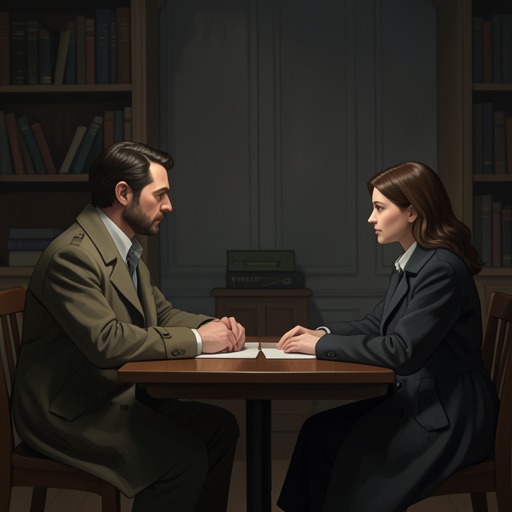
That October day is framed as a beginning for the narrator. A military parade along Fifth Avenue had seemed to him like a fanfare for his own good fortune; after lunch in the park, the leaves on the lake and smoke rising from a bonfire accompany a quieter change in his attention. Sitting with Holly on the boathouse porch railings, he thinks about the future and speaks of his past, while Holly asks about his childhood and gives an account of her own.
Her account is elusive and short on names and places, but it evokes swimming and summer, Christmas trees, pretty cousins, and parties. These images suggest a childhood happier than the background one might expect for someone who ran away. The narrator asks whether she has been on her own since fourteen. Holly confirms that fact, but says the other account is true too, turning apparent contradiction into a distinction between the life she remembers and the decisive act of leaving it. Central Park provides the setting for this partial disclosure without resolving the mystery of her past.
The Ride and the Runaway Horse
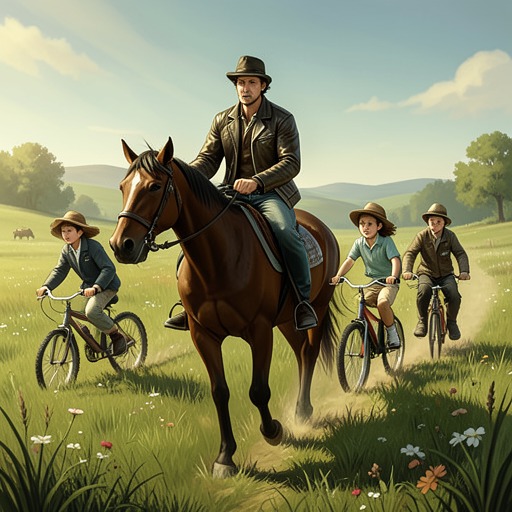
On September 30, the narrator’s birthday, he is waiting downstairs for the postman when Holly invites him to walk horses around the park and say goodbye to her old horse, Mabel Minerva. The date matters to him for the birthday money he expects from his family, but, as he reflects, his presence in the vestibule creates the chance for Holly to invite him and for the later rescue to happen. At the stables on West Sixty-sixth Street, she chooses an old sway-backed black-and-white mare for him, assuring him it is safe, while she rides a silvery horse. They cross Central Park West and enter a leaf-strewn riding path.
For a moment, the outing is an uncomplicated pleasure. The narrator watches the colors of Holly’s hair flash in the autumn light and finds himself absorbed in her happiness rather than his own self-pity. The turn comes when boys leap from the shrubbery, throw rocks, and strike the horses with switches. The narrator’s mare rears, then bolts along the path, leaving him scarcely attached to the saddle as the park’s gravel, trees, lake, and statues rush past.
The runaway mare carries him across the park and out onto Fifth Avenue, into traffic. Holly races after him, calling encouragement; a mounted policeman joins the pursuit, and their horses flank the mare until she stops. The narrator falls, gets back to his feet, and finds himself uncertain where he is. The danger began on a park path, but its consequences spill beyond the park into the crowded avenue; the ride turns a day of shared pleasure into an immediate struggle for his survival.
Rescue and Narrative Significance
After the horse is brought under control, a crowd gathers and the policeman offers to arrange for the horses’ return to their stable. Holly puts the narrator in a taxi and asks how he feels. The sequence makes her care visible through action rather than explanation: she follows a runaway horse into danger and stays with him through the abrupt aftermath.
Across its appearances, Central Park accommodates several different kinds of freedom and exposure. Holly’s refusal to visit the zoo gives its open paths an ethical contrast with captivity; her conversation with the narrator makes the park a rare space for a fragment of personal history; and the horseback episode exposes how quickly that open landscape can become perilous. In the same setting where the narrator briefly shares Holly’s delight, he is forced to depend on her courage. The park thus links their intimacy to a concrete reversal: a companion on a ride becomes his rescuer.